By far the best transportation in Argentina is the bus. With the distances between major tourist attractions stretched across the land, we opted to visit Iguazü falls this way. The bus trip itself was an experience. A taxi delivered us to the only Terminal for buses in BA. You can imagine how large this place is, how many people squeeze together here to take a bus to anywhere, starting or ending their trip right here at the Terminal de Omnibus de Retiro, or just Retiro as the Porteños call it.
Yes, it is a beehive of activity, but well organized ‘if’ you know the system. That is where I fall short; my Spanish is just not good enough to find the correct ins and outs of the BA Retiro. I asked what platform we should be on and was told 37 or 55, about 200 meters apart from each other. We arrived too early to receive a definite answer. Ok, off we go to take a look for ourselves. This place is huge and is full of people. Each passenger or visitor carries suitcases, boxes, kids or strollers and each one is a bit confused and anxious to be at the right gate or just get out of this place. Yet it is not pandemonium. It is an amazing place just to visit, even if you do not take the bus.
After some time I located the correct information board and could read the departure section. Our bus ‘Tigre Iguazü”, was leaving from platform 36, close enough. We waited and about 5 minutes before our departure time a man walked up to us and told us to go on the ‘Via Bariloche’ bus on platform 38. Puzzled, I asked him if he was sure and he smiled and just nodded his head. Welcome to Argentina! All works well and is organized but you need to stay awake and flexible.
The bus left on time at 7 PM and travelled the 1360 KM (844Miles) in 16 ½ hours. We had booked a deluxe sleeper seat, like a business class seat on a plane, wide and large and big enough to sleep in although it only semi-reclines. Dinner was served at 9 PM, Breakfast at 8 AM the next day, just like on an airplane. Our bus was full, a lot of people do travel by bus, reservations are recommended. The bus was clean and even had a steward. The bus lines are run just like the airline industry runs their fleets.
I slept fairly well in my seat and while trying to go to sleep I thought how strange it is, to sleep with all those people behind me, in front of me. Sleeping arrangements are just a delusion anyway. We all sleep with each other. I do sleep with everybody next to me, too. I am just separated by a wall or, by a floor below or a ceiling above, like in a hotel for example. Is it not all delusionary? We all do sleep at night, together, some even on top of us or below us. Think about it!
We arrived in Puerto Iguazü at 11 AM, actually 30 minutes ahead of schedule. We were told someone would be at the arrival gate holding up a name card and would take us to our Hostel. Ok, we arrived early so we waited 10 minutes, then 20 and then 30 minutes and it was 11:30AM by now, our scheduled arrival time. At 11.45, I was pacing the floor, steaming inside and ready to take a taxi when Carlos walked up, nonchalant and with just a small “I am sorry I am late” and took us to the Hostel named ‘Stop’. On the way in Carlos pointed out a restaurant he recommended for dinner. The Restaurant, La Rueda, is the best Parrilla in town, according to Carlos. We do have dinner there later on and it was excellent.
Our Hostel is located in the middle of town and is a great place for backpackers, for young people, for bargain accommodations, it is not a Hotel. While clean, it lacks all the niceties of a B&B or even really hot water. We made do and it served us well for 2 nights but it scored low on my scale of good places. Yes, it is very convenient to any Restaurant or shops or even the bus depot. This particular Hostel just lacks the ‘nice’ feeling that older people like me are looking for.
The next day started off early and we had arranged for a tour and a pickup scheduled at 7:30 AM at the Hostel. Like clockwork, this tour ran on time and was amazing. Mirian, our tour guide, was a pro. With just a few detours to other hotels, adding more people, the bus arrived at the National Park entrance. Hordes of buses, tons of people spilled into the park this early of the day, all arriving to maximize the cool morning, to use the full day for the excursion. Mirian kept her cool and organized us well.
After paying our 100 Pesos admission fee to Mirian, who bought all the tickets for us, made us wear a name tag with her number and name on it, we followed her into the Park and walked to a train station. With wonderful charm, Mirian got us all aboard the train and even though we were scattered, somehow she collected us all at the other end.
Our first stop, after taking the propane gas powered train, was the ‘Throat of the Devil’ Cataract. A very long, narrow, people filled, zigzagging catwalk, sometimes just a few yards above water level, meanders towards the main attraction of the Iguazü falls, about a mile into the river. Garganta Del Diablo can be seen from quite a bit away by the spray it creates rising above its rim. But nothing prepares you for the view from the platform once you arrive. The platform is almost immediately beside the drop off. Pictures cannot do the experience justice.
Over a large area of the River Iguazü, the water drops into a hole. While seemingly calm, even tranquil above this waterfall, a sudden explosion of greed, of thirst erupts from the bowels of the earth itself, sucking the water into it, draining it. This hole is almost totally round and it seems indeed as if the devil, hot and thirsty from living in hell, swallows the much needed water down his throat to quench his thirst.
Chaos erupts when so much water, all at once exposed to gravity and freed to fall without order or guidance, is released. Falling and falling it swirls, falls, hisses and sprays down and down into oblivion. The power is immense, the water roars. The force of Nature is plainly visible and awe overtakes me.
The scene becomes unbelievable yet here I am a witness to it all.
The wonder is that Garganta Del Diablo is but one of about 275 cataracts; admittedly the biggest, the most dangerous perhaps, but nevertheless one of many.
In the rainy season the system of cascades swells to a total of about 350 falls, all within the vicinity of the width of the River Iguazü, which is at this point 2.7 Km wide (1.7Miles). The water falls for 82 Meters (270 feet) so it is not the height that impresses but the multitude of the waterfalls, the diversity, and the difference in panoramas, in angles of view. Each step on the well laid out walks gives a new perspective. It would take more than our allotted day to see the details if I were to study it.
Back on the train and off again at the next stop. We walked and walked, now down steep stairs, taking pictures along the way of the many falls. I am impressed. Over and over I see the waters calm above the precipice and then the sudden release of the power of the water once it is released over the edge. The contrast is so visible; I am walking right alongside the edge of good and evil, up and down, calm and chaos. I am exposed but only to the mist and roar of it, protected by manmade, sturdy walks that aid me in the encounter without allowing me to come to harm. It is a new experience to walk such a tightrope-like trail.
The group now split up, some kept on walking but we decided to visit the ‘from below’ side of the falls by taking a Zodiac boat tour. This is easier said than done because it means going down and down 300 steps to reach the river’s edge way below the falls. With the help of our guide Mirian, who hooked us up with a local photographer as a new guide, we took the easier, more evened out shortcut (only 100 steps down)and finally made it to the dock for our boat trip. We paid 130 Pesos each to take this boat.
The temperature was now 39 C (108F) and the humidity is near 90%. Carol and I disagree slightly about the numbers but it was hot. I felt it was hotter, even more humid. On the edge of the river, below the falls, with the spray in the distance, we were hot, sweaty and miserable. No real shade to hide in. I crawled under the ledge of a rock, squeezing into the shadow of an overhang, a spot the boat crew uses to find relief from the blasting sun. Carol sat on a rock under an umbrella while we waited 20 minutes for the next boat to arrive. Did I say it was hot? It was hot. So much so, that Carol felt her legs get wobbly walking in this heat.
Once on the boat, the breeze created by the speed of the ride felt wonderful. The boat operator guided his boat towards the Throat of the Devil Waterfall but did not get close enough. Was it the half hearted attempt due to the strong opposing current, the force of the falling water, the depth restrictions, and the rocks in the way or his superstitions? I will never know. We did not get close to Garganta Del Diablo from below. Instead we were driven right under the “Salto San Martin” Falls. Yes, through the mist, and under the full force of the falling waters from about 270 feet above. How can I explain this experience?
I was not scared, yet I could not look up nor even open my eyes at first to look up. I tried but could not do it. I could not operate my waterproof camera; I was in self preservation mode. I used one hand to hold on to the boat, the other to shield my eyes to protect them from the falling water. It was instinct. I moved my head bending downward, away from the full force of the splashing. Water roared past me, soaking all my clothes instantly and cooling me off as well. The water was not cold; it felt like a tepid shower. I could breathe but the water, bucket upon bucket load, never ending, sprayed and swirled off me, mixing itself with air and foaming, misting off my body. I believe I held my breath but I do not remember. The experience did not last that long, it was just an in and out.
Then the boat went in a 2nd time to repeat the experience, again soaking me and giving me a longer exposure to the drenching effect. Again there was no way to look up or to take pictures. I held my hand in front of my eyes, protecting them in a fashion similar to the brim of a baseball cap. The agitating water was all around me. I was under the falls, pummeled by water hitting me from above, never ending. I heard the roar of the water, the constant gushing; I felt the full force of the pressure. I heard the whine of the motor going further forward only to be pushed back by the pressure of the oncoming water.
The boat finally veered off, shedding the accumulated water on its deck by leaving on a steep angle. A feeling of relief but also of shared excitement flowed through all the passengers. Smiles erupted all around us. We were all wet to the skin, hair matted down.
We just looked back, stunned for a few moments to have been exposed to such raw power, so simple yet so strong. It was a unique view of Iguazü falls and while short, we all left with a smile on our faces.
The boat took us down river after our soaking and immediately the heat gripped us again. Dense, lush jungle greeted us now on the side of the Iguazü River. Red soil was exposed near the banks. A few roads in the jungle showed the red earth, the color so ubiquitous even the paper currency in the area turns red from exposure to the dust. We were told that the mixture of soil, water and heat makes pine trees, that take 7 years to grow in let’s say Scandinavia, grow here in two years to the same dimensions.
The water is starting to calm after its exciting experience with gravity, getting back into a familiar rhythm. We disembarked about two miles downstream in the jungle, back again in the sweltering heat; but now we were wearing soaking wet clothes. Luckily, before we started the boat trip, we put items that could not be wet, such as wallets, passports, even shoes, inside a water proof bag. Once off the boat we collected our dry stuff leaving the waterproof bags behind.
Having done the best we could to look presentable we now trekked up endless steps, (100) always leading upward away from the river to a truck station. We were still wet. Old army trucks, converted to tourist vehicles to explore the jungle delivered us to our lunch stop. On the way a futile attempt was made to educate us about the wildlife along the way but with the noise of the trucks we saw no life signs of animals, only an occasional coati, a hog-nosed, raccoon like creature.
We had a buffet lunch in the Park in wet clothes, good but too expensive at 100 pesos per person without tips and drinks. Then the bus dropped us off at our hostel about 4:30 PM. Lucky the AC worked in our room; we were still hot and wet and not even in the mood for dinner that night. First thing we did was change our still wet clothes and then we just passed out for the rest of the afternoon. We ate 2 plums each for dinner that Carol had taken from the lunch buffet.
Our trip back to BA’s Retiro, the next day, was without incident and again we slept on an overnighter. I say without incident because now getting a late pickup from the tour agency seemed to be the rule. Having arranged a 2.45 PM pick up at the Hostel, later revised to be 3.00 PM, turned into a 3.20 PM pick up for a 3.45 PM bus trip. The buses leave on time, they are like clockwork. Getting to the bus station just on time was too close for my comfort level. I am more North American oriented; I am driven to visions of missing a bus if not at the station ahead of time. For Argentineans, the pace of life is different, more relaxed, and more nonchalant. The heat must have something to do with it; I noticed I walked slower in Puerto Iguazü than I usually walk. I noticed that I was less worried about missing the bus in Puerto Iguazü than I was in Buenos Aires. Jungle living sure is different, pine trees might grow faster here, but I seemed to slow down.
All that said and done, back in BA having fought traffic jams again, in our pad again writing this, I end by saying the trip was a wonderful, new experience and showed me that Nature although seemingly benign, has tremendous power. And a simple thing like falling water, calls people from every corner of the world to bear witness.
We met a man from Vietnam who travelled 38 hours by plane to visit the falls.
We met a lady from Colorado who just had to see the falls.
There were many of such people, all called somehow by the majesty of it all.
Through my eyes
living my life without regrets
Sunday, February 05, 2012
Sunday, January 29, 2012
Naked on a Truck
We took a taxi back when we got off the ferry from Colonia and were close to ‘home’ when a truck streaked past us with, what seemed like nude guys standing on the open truck bed, holding on to a roll bar.
Now, how fast can you pull your camera and take a picture?
It sure was a sight we have not seen before, so it must be recorded. Did I see nude guys on a Truck? Did I see them in broad daylight, on a very wide and busy street running through the middle of BA?
Then I saw the smallest cover, a men’s string bikini!
Our taxi driver seemed blasé about it all; he had to deliver us to Thames, so he hardly looked. For me however it was a first. I just wanted to share a new way of panhandling with you, because at a traffic light, the men jumped off their truck, ran to car windows and asked for money.
What a crazy way to make a living. Or is there more to it? What did I not see?
I could think of a few things those guys could do or offer that would pay more.
Enjoy the pictures!
Now, how fast can you pull your camera and take a picture?
It sure was a sight we have not seen before, so it must be recorded. Did I see nude guys on a Truck? Did I see them in broad daylight, on a very wide and busy street running through the middle of BA?
Then I saw the smallest cover, a men’s string bikini!
Our taxi driver seemed blasé about it all; he had to deliver us to Thames, so he hardly looked. For me however it was a first. I just wanted to share a new way of panhandling with you, because at a traffic light, the men jumped off their truck, ran to car windows and asked for money.
What a crazy way to make a living. Or is there more to it? What did I not see?
I could think of a few things those guys could do or offer that would pay more.
Enjoy the pictures!
Colonia do Sacramento
History, wherever I go, there she is. She sure shaped the present and might even be able to show the future. I bump into her no matter what country I visit; I always find her along the way. I like her but she can be mean. Just talk to her and she will tell you strange and vivid stories.
For Colonia she starts talking around 1680. Her first spokesmen were the Portuguese who came to control the shipping on the mighty Rio de la Plata River; to control the import and export of riches found further upstream and to levy taxes. The idea was good, yet across the river was the Spanish Settlement of Buenos Aires and Spain wanted to control the river and collect taxes too. Conflict, the food of history, was served.
And so it began:
From To Rule Reason for Handover
1680 1680 Portugal conquered by José de Garro
1680 1681 Spain Provisional Treaty of Lisbon
1681 1705 Portugal conquered in the War of Spanish Succession
1705 1713 Spain Treaty of Utrecht
1714 1762 Portugal First Cevallos expedition
1762 1763 Spain Treaty of Paris (1763)
1763 1777 Portugal Second Cevallos expedition
1777 1811 Spain Revolt led by José Gervasio Artigas
1811 1817 Liga Federal Luso-Brazilian invasion
1817 1822 Portugal Brazilian Declaration of Independence
1822 1828 Brazil Argentina-Brazil War
1828 present Uruguay
You must agree, it is too complex to include all the details but you can find it all on Wiki as I did.
We hailed a taxi at 7 AM, which took us to the terminal of Buquebus, probably the best and fastest marine service between Uruguay and BA. We took the Superfast Ferry as suggested by Glenda of Supernova. Every taxi driver knows this terminal since a lot of Argentineans travel to Colonia for a weekend get-a-away to just enjoy the old town and the ambiance of this historic place.
So much so, that the town of Colonia, a proper town of about 25,000 Uruguayans, accepts the Argentinean peso as normal payment. No need to exchange any monies, naturally a bit of cheating happened, but it was harmless. Instead of using the proper rate of 3.5 Uruguay pesos for one Argentinean peso, the rate most often used was 3 pesos. Even US $ could be used at a rate of 18 Uruguay Pesos for one US $. Unless you buy something big or visit a museum (all of which require Uruguayan Pesos) it does not pay to exchange money at a bank or exchange office. Let the little entrepreneur make money, too.
We booked a ‘tour’ for the day, which meant we did not have to walk the 6 blocks to town or the several kilometers to the old bullring and Jesuit Seminary but were driven about in a large bus. We had a small walking tour too, courtesy of Supernova. Our lunch was included in this package and what a lunch it was. We paid for the whole trip, boat, bus, tour, guide and the bus trip back to the harbor a total of US$ 120.- add to that the taxis to and from the bus terminal of Pesos $ 40.- each trip and the grand total for each person was a cool $ 140. It was certainly a bargain.
The historic part of the city is small; it can be covered in less than a one day walking tour if you so desire, but I took only in what I liked best. Intriguing to me were the differences in style of housing and the differences in street design between the Spanish and the Portuguese.
The Portuguese built roads that had a center gutter, the road lower in the middle of the street which made for a better drainage in rain and better air circulation. The Spanish crowned the streets, with the middle being higher and rounded and the gutter being near the sides of the road. The Spanish included high sidewalks to protect the foot traffic from the run offs and the crowned roads made it easier for cart traffic to travel on.
The Portuguese built houses with raftered roofs topped off with clay knee tiles, so called because they use the thighs of the makers of the tiles (mostly women and children to get smaller tiles) to form the clay into tiles. The Spanish used mostly flat roofs so they could use 2 storied buildings and use the top of the roof for storage.
Colonia is a mix of both since each occupation brought new decrees, new ways of looking at life and new styles of construction and living.
The oldest church in Uruguay is located here. Built, destroyed, rebuilt and again destroyed and blown up etc.; it is still the oldest church and quite Spartan on the inside.
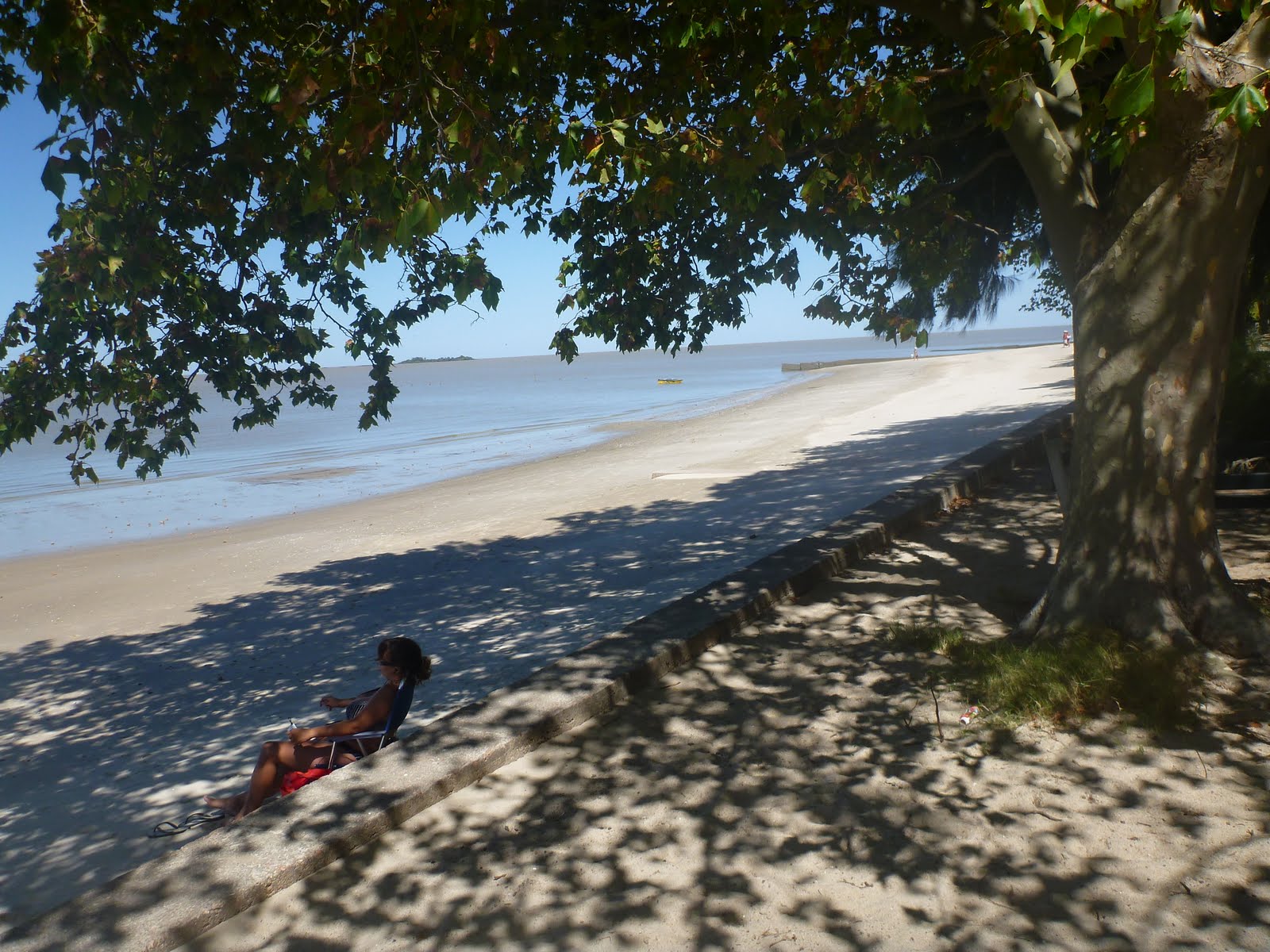
The whole of the town of Colonia do Sacramento is filled with greenery; with shade trees and many flowers,
it is very pleasant. It was a good outing for a day, a good trip across the mighty, 290 KM wide Rio de la Plata.
The river, it’s brown but not polluted water brings dirt from the Andes all the way into the Atlantic Ocean. It looks like the ocean itself, but the waters are not salty. Dotted along the shore of Colonia are dozens of islands, tree covered and not inhabited. The whole of Uruguay, from the little I have seen from my small tour, seems very aware of pollution and trash and the people make it a point to not to litter in the first place. A lesson, I feel, that needs to be learned by most of the rest of the world.
For Colonia she starts talking around 1680. Her first spokesmen were the Portuguese who came to control the shipping on the mighty Rio de la Plata River; to control the import and export of riches found further upstream and to levy taxes. The idea was good, yet across the river was the Spanish Settlement of Buenos Aires and Spain wanted to control the river and collect taxes too. Conflict, the food of history, was served.
And so it began:
From To Rule Reason for Handover
1680 1680 Portugal conquered by José de Garro
1680 1681 Spain Provisional Treaty of Lisbon
1681 1705 Portugal conquered in the War of Spanish Succession
1705 1713 Spain Treaty of Utrecht
1714 1762 Portugal First Cevallos expedition
1762 1763 Spain Treaty of Paris (1763)
1763 1777 Portugal Second Cevallos expedition
1777 1811 Spain Revolt led by José Gervasio Artigas
1811 1817 Liga Federal Luso-Brazilian invasion
1817 1822 Portugal Brazilian Declaration of Independence
1822 1828 Brazil Argentina-Brazil War
1828 present Uruguay
You must agree, it is too complex to include all the details but you can find it all on Wiki as I did.
We hailed a taxi at 7 AM, which took us to the terminal of Buquebus, probably the best and fastest marine service between Uruguay and BA. We took the Superfast Ferry as suggested by Glenda of Supernova. Every taxi driver knows this terminal since a lot of Argentineans travel to Colonia for a weekend get-a-away to just enjoy the old town and the ambiance of this historic place.
So much so, that the town of Colonia, a proper town of about 25,000 Uruguayans, accepts the Argentinean peso as normal payment. No need to exchange any monies, naturally a bit of cheating happened, but it was harmless. Instead of using the proper rate of 3.5 Uruguay pesos for one Argentinean peso, the rate most often used was 3 pesos. Even US $ could be used at a rate of 18 Uruguay Pesos for one US $. Unless you buy something big or visit a museum (all of which require Uruguayan Pesos) it does not pay to exchange money at a bank or exchange office. Let the little entrepreneur make money, too.
We booked a ‘tour’ for the day, which meant we did not have to walk the 6 blocks to town or the several kilometers to the old bullring and Jesuit Seminary but were driven about in a large bus. We had a small walking tour too, courtesy of Supernova. Our lunch was included in this package and what a lunch it was. We paid for the whole trip, boat, bus, tour, guide and the bus trip back to the harbor a total of US$ 120.- add to that the taxis to and from the bus terminal of Pesos $ 40.- each trip and the grand total for each person was a cool $ 140. It was certainly a bargain.
The historic part of the city is small; it can be covered in less than a one day walking tour if you so desire, but I took only in what I liked best. Intriguing to me were the differences in style of housing and the differences in street design between the Spanish and the Portuguese.
The Portuguese built roads that had a center gutter, the road lower in the middle of the street which made for a better drainage in rain and better air circulation. The Spanish crowned the streets, with the middle being higher and rounded and the gutter being near the sides of the road. The Spanish included high sidewalks to protect the foot traffic from the run offs and the crowned roads made it easier for cart traffic to travel on.
The Portuguese built houses with raftered roofs topped off with clay knee tiles, so called because they use the thighs of the makers of the tiles (mostly women and children to get smaller tiles) to form the clay into tiles. The Spanish used mostly flat roofs so they could use 2 storied buildings and use the top of the roof for storage.
Colonia is a mix of both since each occupation brought new decrees, new ways of looking at life and new styles of construction and living.
The oldest church in Uruguay is located here. Built, destroyed, rebuilt and again destroyed and blown up etc.; it is still the oldest church and quite Spartan on the inside.
The whole of the town of Colonia do Sacramento is filled with greenery; with shade trees and many flowers,
it is very pleasant. It was a good outing for a day, a good trip across the mighty, 290 KM wide Rio de la Plata.
The river, it’s brown but not polluted water brings dirt from the Andes all the way into the Atlantic Ocean. It looks like the ocean itself, but the waters are not salty. Dotted along the shore of Colonia are dozens of islands, tree covered and not inhabited. The whole of Uruguay, from the little I have seen from my small tour, seems very aware of pollution and trash and the people make it a point to not to litter in the first place. A lesson, I feel, that needs to be learned by most of the rest of the world.
Supernova
It helps to have helpful people in a town you do not know.
Meet Glenda Di Lullo from Supernova, the queen of Travel and Tourist Info, posing here with Carol.
Her partner is Sabrina Fendrik.
If you need anything in BA or Argentina, make it a point to contact them @ http://www.supernovargentina.com/ or write sabrina@supernovargetina.com
They are very fast and efficient with a good knowledge of English and located in Palermo, not far from the stop of the Subte “Plaza Italia” on the green D line. The address is # 4275 Charcas.
You have never seen a person on line that fast, while being on the phone at the same time and talking, to you too. Amazing! Very polite, very pleasant and fairly priced! Way to go, Glenda!
Meet Glenda Di Lullo from Supernova, the queen of Travel and Tourist Info, posing here with Carol.
Her partner is Sabrina Fendrik.
If you need anything in BA or Argentina, make it a point to contact them @ http://www.supernovargentina.com/ or write sabrina@supernovargetina.com
They are very fast and efficient with a good knowledge of English and located in Palermo, not far from the stop of the Subte “Plaza Italia” on the green D line. The address is # 4275 Charcas.
You have never seen a person on line that fast, while being on the phone at the same time and talking, to you too. Amazing! Very polite, very pleasant and fairly priced! Way to go, Glenda!
Thursday, January 26, 2012
San Telmo
San Telmo is the oldest suburb of BA. It was a Mariners hangout, and full of bars, brothels and houses of ill refute in years back. Certainly, it was Tango Country, and still is filled with Tango Schools, Tango Milongas (Schools), Tango shows, etc. Today’s houses are no longer the brothels of years back but much quieter, refurbished places, even posh in some spots and the area is quaint and there are plenty of stuffy Antique stores.
Every Sunday, for more than 9 blocks off the Plaza de Mayo, along Defensa Street, BA has a flea market. It all started as an Antique market but has developed into much more today. Officially the start of the market is the Plaza Dorrego, yet we saw it continue on and on down Defensa St.
This Sunday, rain is promised to break the temperatures of 34 C + (98F) and to cool things down. Rain also means I would have fewer people to bump into, fewer vendors too, but I felt some would still be there. So it was a good day to go and visit. I packed my little red, cheap back pack with water, some tissues that can double as toilet paper and off we go. Walking to the seven blocks to the Subte is now routine and we know how it works. Our Subte takes us to Cathedral, the end Station. We step out and yes, we look up and watch for bird droppings. The gods are with us; we are not bombarded by birds but after crossing the Plaza de Mayo, at the beginning of Defensa Street, are mobbed by people. Somehow they must not have heard about the weather forecast, most of BA seems to be here. It is crowded. And this is the summer vacation period for most Porteños. Many locals are not even here as they are on vacation. Police have roped off the street and amazingly it seems very organized.
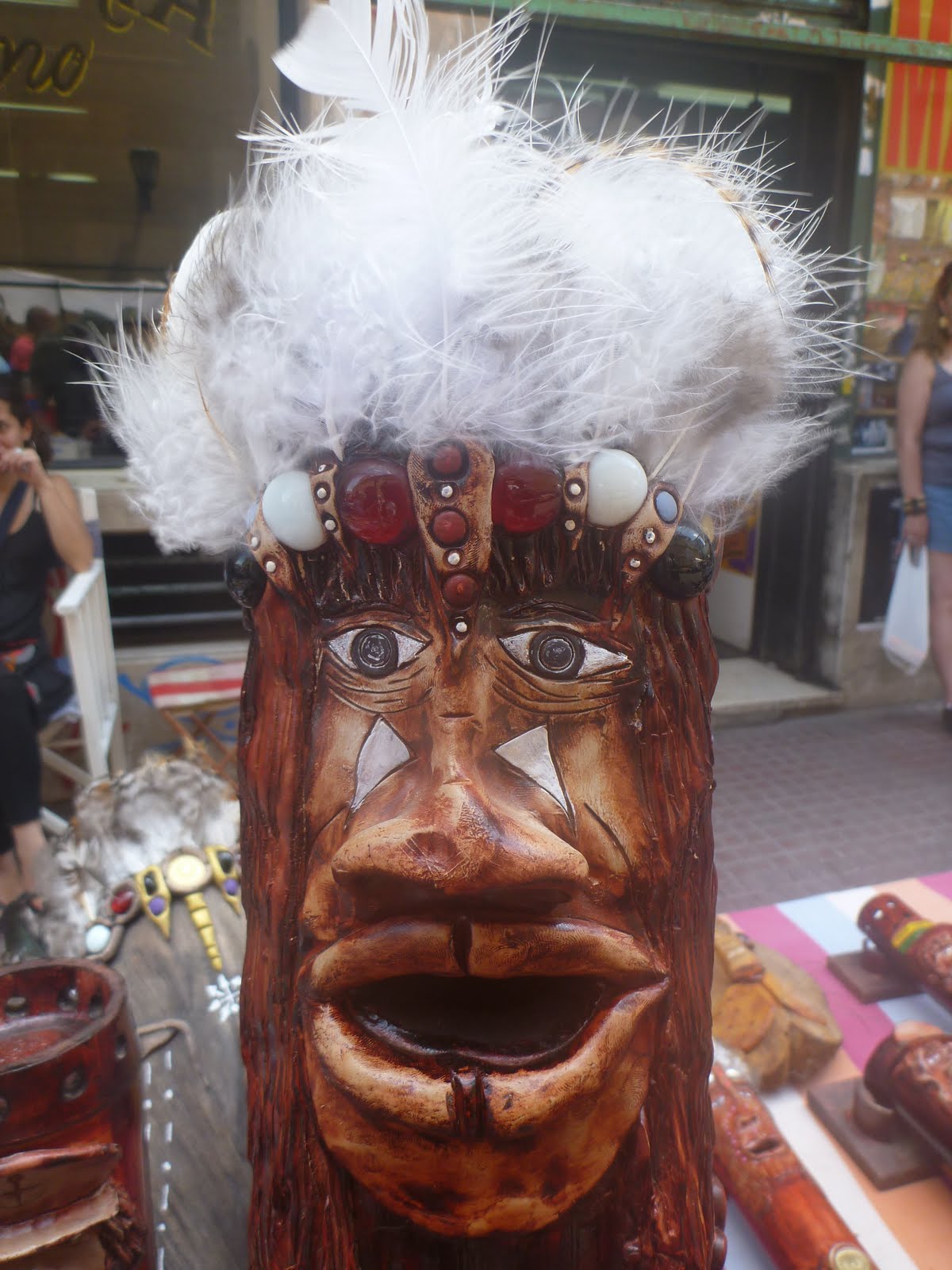
The merchandize you ask? From A to Z, whatever you can think of is here. You will find from the nutty to the sublime, from kitsch to treasure. It is all in the eye of the beholder. Not a lot of haggling happens here. The price listed is what you pay or you keep on walking. Is it cheap? I don’t know, but it is fun! I see colorful running shoes (sneakers), airy sandals for the ladies, I see jewelry, smoking Joes (incense burners), paintings, hats, dresses, musical performers, Tango platforms with dancing, and on and on it goes. The street is long and packed. I find an electric outlet that allows me to plug in my US based plug and buy it for 15 Pesos. I keep on walking. Then I stand still to hear the wonderful performance of a classical guitarist who is fantastic. Even the locals rush to buy his CDs and I buy one for 30 Pesos. All of this stuff goes into my knapsack.
It is hot, no clouds in the sky, the sun beating down on me. The road is cobblestone, so walking is precarious, watch how you put your foot down. There are holes; there might be dog poop on the street. The sidewalks are occupied by the vendors, the visitors walk in the middle of the street, and no shade for the walkers, it is hot. I drink some water. About midway to the Plaza Dorrego a man seems rushing in a raincoat; necktie up in the air, glasses askew in a panicky hurry. It is a performer, but he is good and makes it look ‘real’ even though he is standing still. He was joined in his performance by another shopper mimicing his actions.
We see a man selling wooden utensils and buy a salad fork and a spoon; both carved out of rare woods and add them to my collection in my knapsack. On the corner stands a man with a gizmo that can make sounds like a rooster in the morning. I pass on that. A bit further, a Tango performance is in progress, a passerby, a Japanese lady, dances with a Porteño and they are both good. And on and on Carol and I walk. While we started off at about 10 AM it is now about 1.30 PM and time to sit down someplace and rest our bones. It is hot! No rain in sight, not even a cloud. We try to get into a good looking small restaurant, but the door is closed. We look through the glass and yes, a man asked us what we would like and naturally we said, a table for two and he slammed the door in our faces and walked away. Is it rude? Yes, Very rude! But that too can be part of BA. BA is a mix of extremely nice and very opinionated people. We walked on to find another place and did find a restaurant right on Plaza Dorrego. We just sat down, drank some mineral water and I ordered a sandwich. It was good to hang up my knapsack, take my sunhat off and stretch out.
The activities in the restaurant were typical BA, too. An artist was charcoal sketching a group of 4 at the next table. Two ladies traded the latest neighborhood news one table over and even took this photo of us. Ah, it felt good to be out of the sun, to sit down. The activities around us are abuzz. It is a constant coming and going. A busy place! Having sat such for some time, we got up and walked one more time around the Plaza, but…. the heat was too great. We walked away for some blocks and took a taxi back to the Subte station and took the train back to our stop at Plaza Italia. Coming out to street level I noticed I had left my knapsack at the restaurant, yes, along with all my new buys. I have no hope in getting any of it back. Naturally it was stupid of me and I blamed my aging brain but it was hot, too.
It never rained that day, I wish it had. I might not have been so worn out and felt so miserable about losing my cheap knapsack.
Every Sunday, for more than 9 blocks off the Plaza de Mayo, along Defensa Street, BA has a flea market. It all started as an Antique market but has developed into much more today. Officially the start of the market is the Plaza Dorrego, yet we saw it continue on and on down Defensa St.
This Sunday, rain is promised to break the temperatures of 34 C + (98F) and to cool things down. Rain also means I would have fewer people to bump into, fewer vendors too, but I felt some would still be there. So it was a good day to go and visit. I packed my little red, cheap back pack with water, some tissues that can double as toilet paper and off we go. Walking to the seven blocks to the Subte is now routine and we know how it works. Our Subte takes us to Cathedral, the end Station. We step out and yes, we look up and watch for bird droppings. The gods are with us; we are not bombarded by birds but after crossing the Plaza de Mayo, at the beginning of Defensa Street, are mobbed by people. Somehow they must not have heard about the weather forecast, most of BA seems to be here. It is crowded. And this is the summer vacation period for most Porteños. Many locals are not even here as they are on vacation. Police have roped off the street and amazingly it seems very organized.
The merchandize you ask? From A to Z, whatever you can think of is here. You will find from the nutty to the sublime, from kitsch to treasure. It is all in the eye of the beholder. Not a lot of haggling happens here. The price listed is what you pay or you keep on walking. Is it cheap? I don’t know, but it is fun! I see colorful running shoes (sneakers), airy sandals for the ladies, I see jewelry, smoking Joes (incense burners), paintings, hats, dresses, musical performers, Tango platforms with dancing, and on and on it goes. The street is long and packed. I find an electric outlet that allows me to plug in my US based plug and buy it for 15 Pesos. I keep on walking. Then I stand still to hear the wonderful performance of a classical guitarist who is fantastic. Even the locals rush to buy his CDs and I buy one for 30 Pesos. All of this stuff goes into my knapsack.
It is hot, no clouds in the sky, the sun beating down on me. The road is cobblestone, so walking is precarious, watch how you put your foot down. There are holes; there might be dog poop on the street. The sidewalks are occupied by the vendors, the visitors walk in the middle of the street, and no shade for the walkers, it is hot. I drink some water. About midway to the Plaza Dorrego a man seems rushing in a raincoat; necktie up in the air, glasses askew in a panicky hurry. It is a performer, but he is good and makes it look ‘real’ even though he is standing still. He was joined in his performance by another shopper mimicing his actions.
We see a man selling wooden utensils and buy a salad fork and a spoon; both carved out of rare woods and add them to my collection in my knapsack. On the corner stands a man with a gizmo that can make sounds like a rooster in the morning. I pass on that. A bit further, a Tango performance is in progress, a passerby, a Japanese lady, dances with a Porteño and they are both good. And on and on Carol and I walk. While we started off at about 10 AM it is now about 1.30 PM and time to sit down someplace and rest our bones. It is hot! No rain in sight, not even a cloud. We try to get into a good looking small restaurant, but the door is closed. We look through the glass and yes, a man asked us what we would like and naturally we said, a table for two and he slammed the door in our faces and walked away. Is it rude? Yes, Very rude! But that too can be part of BA. BA is a mix of extremely nice and very opinionated people. We walked on to find another place and did find a restaurant right on Plaza Dorrego. We just sat down, drank some mineral water and I ordered a sandwich. It was good to hang up my knapsack, take my sunhat off and stretch out.
The activities in the restaurant were typical BA, too. An artist was charcoal sketching a group of 4 at the next table. Two ladies traded the latest neighborhood news one table over and even took this photo of us. Ah, it felt good to be out of the sun, to sit down. The activities around us are abuzz. It is a constant coming and going. A busy place! Having sat such for some time, we got up and walked one more time around the Plaza, but…. the heat was too great. We walked away for some blocks and took a taxi back to the Subte station and took the train back to our stop at Plaza Italia. Coming out to street level I noticed I had left my knapsack at the restaurant, yes, along with all my new buys. I have no hope in getting any of it back. Naturally it was stupid of me and I blamed my aging brain but it was hot, too.
It never rained that day, I wish it had. I might not have been so worn out and felt so miserable about losing my cheap knapsack.
La Cabrera
Famous for its Beef, Argentina does not only export it but eats it as well. In Palermo Soho, our part of town while we are here, are many Restaurants. So we have been asking folks: “Do you know a good place to have dinner?” Fodor’s has a list of good places, but so do people that have visited BA before us. Fodor’s top choice is the Grillado & Bar named La Cabrera, a place only 5 blocks away from where we live now.
Friends too told us about this place, so Carol and I made it a point to forgo all the other good looking places around us and specifically seek out La Cabrera. www.parrillalacabrera.com.ar
We had already learned that people eat late in BA, it is not unusual to eat dinner at 10 PM and a dinner lasts usually for a couple of hours so that means ending the day with a full stomach and going to bed around midnight or later. Not good for older folks like us so we opted to be there at their 8:30 PM opening, especially since we did not have a reservation. This Restaurant is so good that reservations are recommended. Carol and I lucked out and a table was given to us on the outside, set up on the sidewalk as it is in Paris. The set up with a white table cloth, clean and sophisticated yet with a twist of rustic dining, added to the experience. The atmosphere was totally BA, Argentina. The weather was mild and the people around us were full of energy and excited spirits.
A young German guy and his partner took some pictures of us as we waited a few minutes before sitting down to dine. He told us he was working in Brazil and heard about La Cabrera so they flew in just to eat here. He was totally serious; the reputation of this Parrilla is worldwide.
So our expectations were high when the waiter gave us menus. A man of moderate means and one not to squander money on non essentials, I opted to just order the main course of ojo de bife and a salad. I was warned that the portions are large and that even a half a portion would be totally satisfying. I drank mineral water, yes with bubbles, with my meal and not the much offered wines. There is always room to order more if need be.
The service was good; our waiter spoke Spanish even though he knew we were from North America. He spoke English if we got stuck with words and answered in English if he felt we understood better but it was nice to be served in his language and not to be patronized as a tourist. I never felt rushed and once we ordered, after just sitting for a while drinking our waters, gawking at the passers bye, the meal came quickly and oh my, did it have eye appeal. The salad was served in a large bowl of pewter, brimming full of greens, tomatoes and onions, fresh and plentiful. Fine olive oil and balsamic vinegar accompanied the salad in appropriate bottles in a self-serve, make your own dressing kind of way.
The meat, sizzling, hot, simple but ever so tasty, on a wooden framed hot plate with a handle was grilled to perfection. Four small, mouthwatering side dishes in small containers were placed on a white napkin right on top of the wooden extension of the hot plate.An assorted variety of unusual small delicacies served as vegetables, such as pumpkin puree with raisins, baked garlic cloves, egged eggplant, mixed couscous, marinated mushrooms, ground green olives, and even apple sauce. The servings were a display of creativity and simplicity yet sophistication. I have been in many places in my life that were impressive and La Cabrera, simple yet elegant can hold its own among them. I was duly impressed.
Yes, I recommend this place to anybody visiting BA. Please make reservations through the website I gave you above, it makes for a better table, for a better experience. The proprietors need to be commended on a job well done in the culinary arts.
And…… the best until last….. All of it tasted
Devine!
Friends too told us about this place, so Carol and I made it a point to forgo all the other good looking places around us and specifically seek out La Cabrera. www.parrillalacabrera.com.ar
We had already learned that people eat late in BA, it is not unusual to eat dinner at 10 PM and a dinner lasts usually for a couple of hours so that means ending the day with a full stomach and going to bed around midnight or later. Not good for older folks like us so we opted to be there at their 8:30 PM opening, especially since we did not have a reservation. This Restaurant is so good that reservations are recommended. Carol and I lucked out and a table was given to us on the outside, set up on the sidewalk as it is in Paris. The set up with a white table cloth, clean and sophisticated yet with a twist of rustic dining, added to the experience. The atmosphere was totally BA, Argentina. The weather was mild and the people around us were full of energy and excited spirits.
A young German guy and his partner took some pictures of us as we waited a few minutes before sitting down to dine. He told us he was working in Brazil and heard about La Cabrera so they flew in just to eat here. He was totally serious; the reputation of this Parrilla is worldwide.
So our expectations were high when the waiter gave us menus. A man of moderate means and one not to squander money on non essentials, I opted to just order the main course of ojo de bife and a salad. I was warned that the portions are large and that even a half a portion would be totally satisfying. I drank mineral water, yes with bubbles, with my meal and not the much offered wines. There is always room to order more if need be.
The service was good; our waiter spoke Spanish even though he knew we were from North America. He spoke English if we got stuck with words and answered in English if he felt we understood better but it was nice to be served in his language and not to be patronized as a tourist. I never felt rushed and once we ordered, after just sitting for a while drinking our waters, gawking at the passers bye, the meal came quickly and oh my, did it have eye appeal. The salad was served in a large bowl of pewter, brimming full of greens, tomatoes and onions, fresh and plentiful. Fine olive oil and balsamic vinegar accompanied the salad in appropriate bottles in a self-serve, make your own dressing kind of way.
The meat, sizzling, hot, simple but ever so tasty, on a wooden framed hot plate with a handle was grilled to perfection. Four small, mouthwatering side dishes in small containers were placed on a white napkin right on top of the wooden extension of the hot plate.An assorted variety of unusual small delicacies served as vegetables, such as pumpkin puree with raisins, baked garlic cloves, egged eggplant, mixed couscous, marinated mushrooms, ground green olives, and even apple sauce. The servings were a display of creativity and simplicity yet sophistication. I have been in many places in my life that were impressive and La Cabrera, simple yet elegant can hold its own among them. I was duly impressed.
Yes, I recommend this place to anybody visiting BA. Please make reservations through the website I gave you above, it makes for a better table, for a better experience. The proprietors need to be commended on a job well done in the culinary arts.
And…… the best until last….. All of it tasted
Devine!
Friday, January 20, 2012
Evita
Evita (1919-1953) Requiescant in Pace
If it had not been for the Broadway Musical, would we know Evita today? She was 33 years old when she died of cervical cancer. She was 28 old when she became first lady of Argentina, her husband 26 years her senior. Called the mother of Argentina but also ‘esa mujer’ (that woman), she was (and is) loved and hated still today. Some even want to call her a Saint. She certainly was a powerful speaker, a committed reformer for the socially disadvantaged. The claim that Perónism ruined Argentina is debated politically worldwide still today.
The museum we visited was set up in a former villa that Evita converted to a home for single mothers. Seeing the many displays, videos, artifacts and personal belongings, I could not help but ask myself if I, at the age of 28, could have done what she did. The answer is a definite ‘NO’.
I was too self-centered at age 28, too immature, even too small minded and certainly did not have a ‘world’ vision. So how come Evita had this kind of vision? Did she? Or did she play house or ‘first lady’? From her speeches, that still ring in the ears of many people in Argentina, I must admit she outshone me like a light bulb outshines a lightning bug. But her life was different too.
Eva’s father died while she was quite young
leaving her mother and siblings to struggle to keep the family together and put food on the table. Eva’s determination to help the poor came from her early years and from her life in the poorly paid theatre world. Her mother’s strong will and determination provided a role model that Eva followed throughout her life.
I am impressed by her. I cannot tell if she ruined Argentina by installing all the social programs and giving away the farm or if she truly towed Argentina into the 21st Century through her many reforms.
Not one person alone can change the lives of nearly 40 million people, yet she certainly was a good catalyst. Controversial to be for sure, misguided even in her bleeding heart campaigns, but I do not believe selfish. It might have been her youth that gave way to the ideology of helping the masses. Even today, traces of her doings are in the minds of the people. Health care reform, old age pensions, youth programs and total social restructuring were her guiding principles. She pushed for the equalization of women and their voting rights, for changes that ultimately every modern society in the world today needs. Was it sound? Economically, in the short run, it turned into a financial disaster for Argentina. This undoing of the old thinking, of the male oriented thinking of Argentina, of the dismantling of the hierarchical establishments is what made her so reviled by the establishment. Even today!
Evita was a very controversial woman, a very bright woman and a very sad woman in a way too.
Her illness in the last months before her death was so severe, a frontal lobotomy was performed to ease her pain.
Early procedures of radiation treatments were tried on her. When her husband, after a coup in 1955, was exiled to Spain, her embalmed body was stolen by the military and hidden. She was buried secretly under a false name someplace in Milan, Italy, her body even mutilated in death (broken nose, missing toes, bashed in head). People were forbidden to even speak her name during the Junta regime. Sixteen years later, she was finally returned to the Recoleta Cemetery right here in BA for the rest she deserves.
Evita was a complicated person in a complicated period in Argentina. Yet, as she said herself: “mi vida, mi mission, me dstino!”
The song still sounds in my ears: ”Don’t cry for me, Argentina!”
She did what she did, lived the life she was destined to live.
In a way her life was too short, too painful, too disturbing, I am glad I am who I am, after all.
If it had not been for the Broadway Musical, would we know Evita today? She was 33 years old when she died of cervical cancer. She was 28 old when she became first lady of Argentina, her husband 26 years her senior. Called the mother of Argentina but also ‘esa mujer’ (that woman), she was (and is) loved and hated still today. Some even want to call her a Saint. She certainly was a powerful speaker, a committed reformer for the socially disadvantaged. The claim that Perónism ruined Argentina is debated politically worldwide still today.
The museum we visited was set up in a former villa that Evita converted to a home for single mothers. Seeing the many displays, videos, artifacts and personal belongings, I could not help but ask myself if I, at the age of 28, could have done what she did. The answer is a definite ‘NO’.
I was too self-centered at age 28, too immature, even too small minded and certainly did not have a ‘world’ vision. So how come Evita had this kind of vision? Did she? Or did she play house or ‘first lady’? From her speeches, that still ring in the ears of many people in Argentina, I must admit she outshone me like a light bulb outshines a lightning bug. But her life was different too.
Eva’s father died while she was quite young
leaving her mother and siblings to struggle to keep the family together and put food on the table. Eva’s determination to help the poor came from her early years and from her life in the poorly paid theatre world. Her mother’s strong will and determination provided a role model that Eva followed throughout her life.
I am impressed by her. I cannot tell if she ruined Argentina by installing all the social programs and giving away the farm or if she truly towed Argentina into the 21st Century through her many reforms.
Not one person alone can change the lives of nearly 40 million people, yet she certainly was a good catalyst. Controversial to be for sure, misguided even in her bleeding heart campaigns, but I do not believe selfish. It might have been her youth that gave way to the ideology of helping the masses. Even today, traces of her doings are in the minds of the people. Health care reform, old age pensions, youth programs and total social restructuring were her guiding principles. She pushed for the equalization of women and their voting rights, for changes that ultimately every modern society in the world today needs. Was it sound? Economically, in the short run, it turned into a financial disaster for Argentina. This undoing of the old thinking, of the male oriented thinking of Argentina, of the dismantling of the hierarchical establishments is what made her so reviled by the establishment. Even today!
Evita was a very controversial woman, a very bright woman and a very sad woman in a way too.
Her illness in the last months before her death was so severe, a frontal lobotomy was performed to ease her pain.
Early procedures of radiation treatments were tried on her. When her husband, after a coup in 1955, was exiled to Spain, her embalmed body was stolen by the military and hidden. She was buried secretly under a false name someplace in Milan, Italy, her body even mutilated in death (broken nose, missing toes, bashed in head). People were forbidden to even speak her name during the Junta regime. Sixteen years later, she was finally returned to the Recoleta Cemetery right here in BA for the rest she deserves.
Evita was a complicated person in a complicated period in Argentina. Yet, as she said herself: “mi vida, mi mission, me dstino!”
The song still sounds in my ears: ”Don’t cry for me, Argentina!”
She did what she did, lived the life she was destined to live.
In a way her life was too short, too painful, too disturbing, I am glad I am who I am, after all.
Subscribe to:
Posts (Atom)