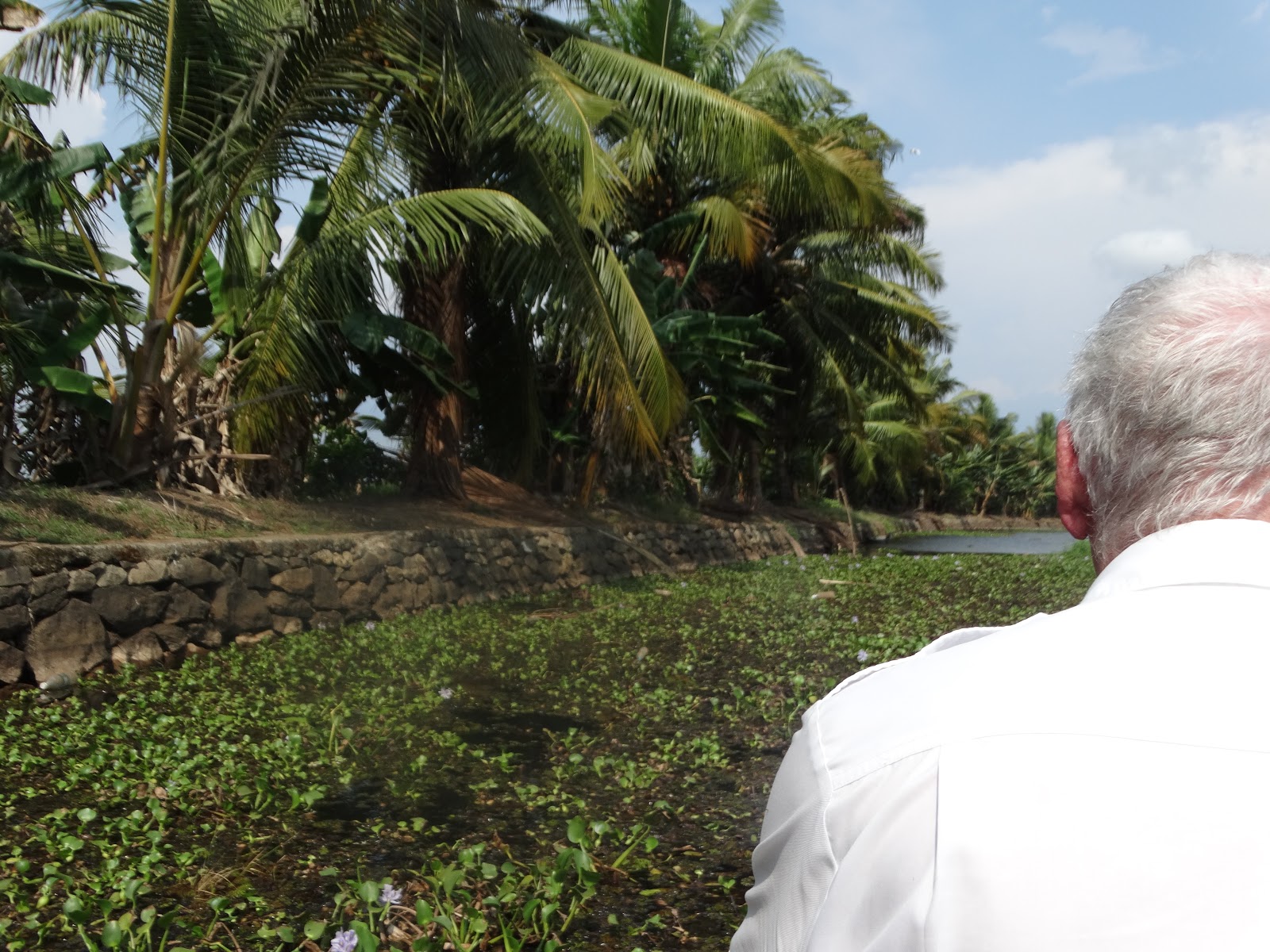
Hans Is Working Hard to Get Us Through All the Water Plants
Lilac Lily
The River Is the Main Road
And Canoes Are the Main Mode of Transportation
Houses Can Be Right At the Water's Edge
PINK????
Kids Swim In This River
Workers Off-Loading Bags of Something
More Bags of Something Being Moved to Another Place
Getting Laundry Done
Women Have to Stand In the River to Do Laundry
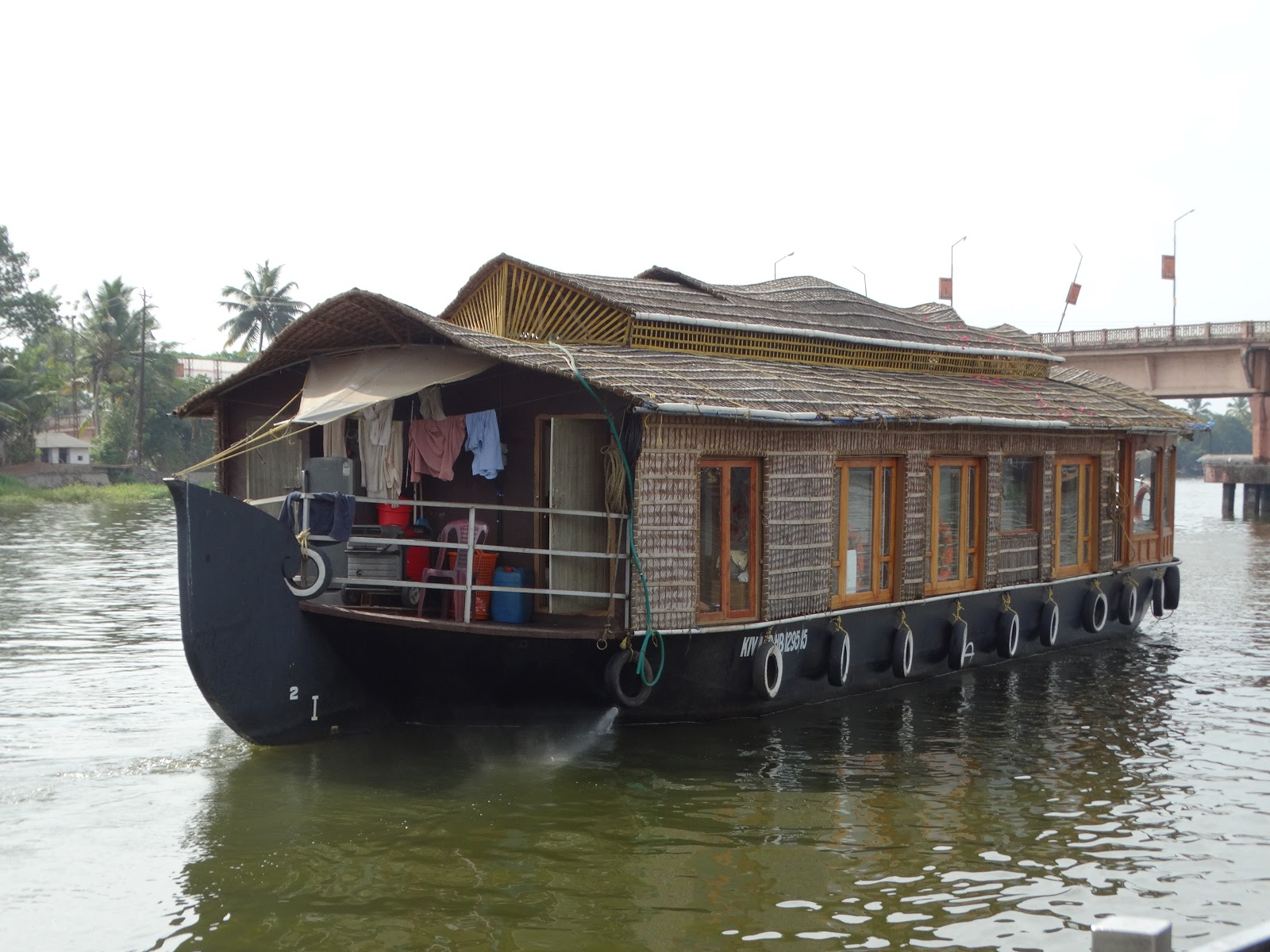
People Live On Many of These Houseboats
We Had a Brief But Heavy Rain Storm
But We Were Snug and Dry In Our Houseboat
Others Were Not So Lucky
Disembarking - A Woman From Another Group Accidentally
Kicked Over a Suitcase That Was Sitting On the Edge Of the Path
and It Landed In the River. Luckily a Porter Jumped In and
Rescued It
This Large Net Is Lowered Into the Water To Hopefully
Catch Some Fish
We had some time before we had to be on our houseboats near
here, so we took a stroll along the water’s edge of old Kochi. Fishing boats
were tied up, their nets sticking way in the air. The fishermen here, in the
shallows, use a way of fishing learned from the Chinese. (Or was this the other
way around?). A very large square of netting is lowered into the water, held
spread out by very long, skinny but strong beams. After some time, this net is
then carefully pulled up and any fish swimming over the net in the water are pulled
in. it is very ingenious and very effective. We tried on one boat to catch fish
but it does take some skill, we caught only one miserly small fellow.
Lots of These Blue Crabs Were For Sale
We saw, on our further walk along the water’s edge how
effective the locals are, because there were fish mongers selling the morning
catch. Enough fish for everyone. I wished I could have bought one and then
steamed it for lunch. Yummy!
Sampling the Wares
Shark For Sale
We learned on this walk that the Portuguese planted some
African trees here. And the British brought trees native to Australia.
Craw Fish? Shrimp?
We proceeded after our walk to the houseboat ‘harbor’ via
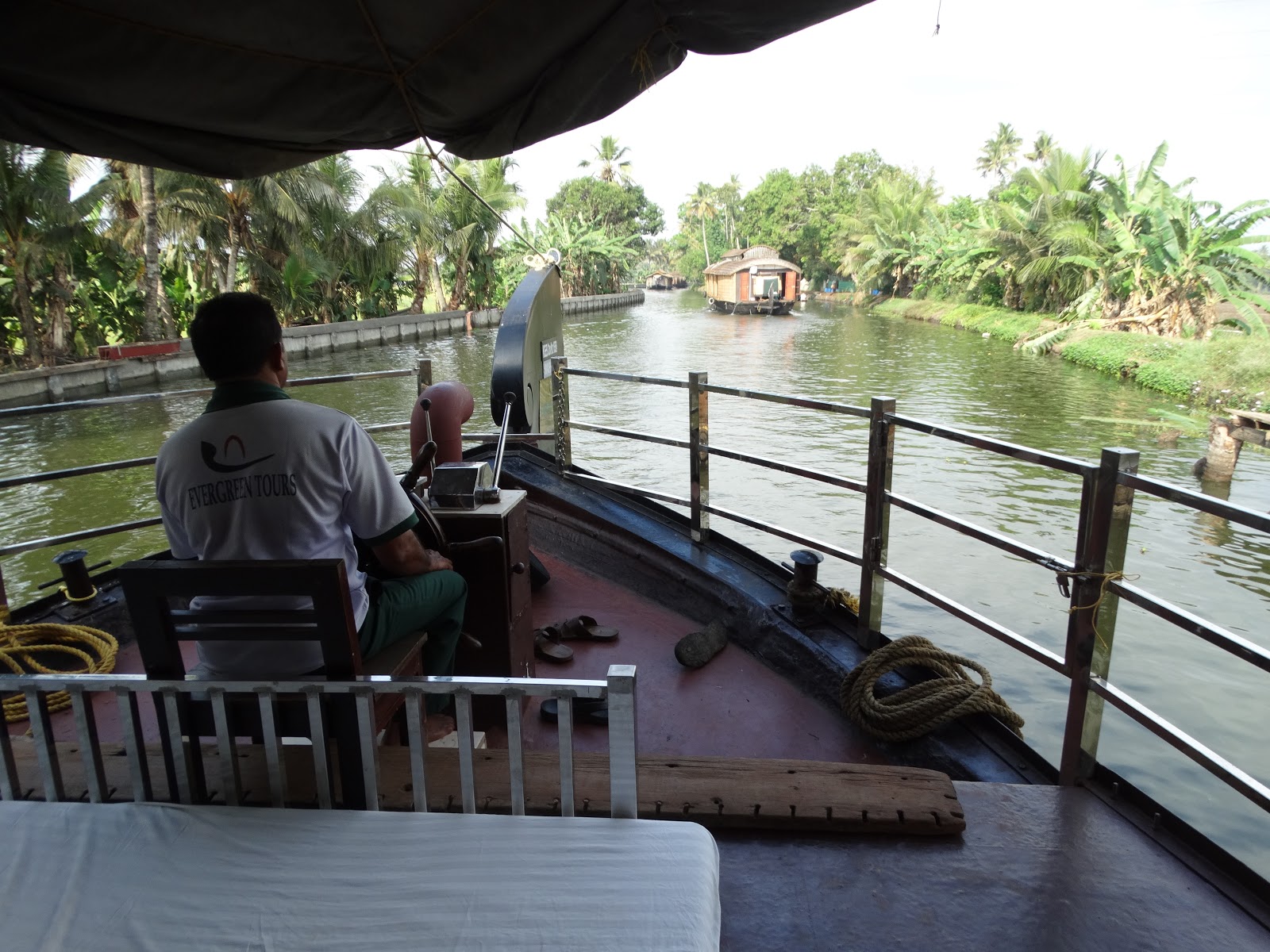
bus. Our houseboat tour company was named Evergreen and they had a fleet of 10
boats. But all in all there are 1000 house boats on the river giving similar,
albeit less luxurious rides to people.
What a Tale They Had To Tell About Getting the
Beer and Wine
We had brought on board a stash of beer
and wine. Alcohol is not included into the boat rental fee and I just have to
tell you how we obtained our beer. On the bus it was decided we were buying in
bulk for the group and then divide the cost up. The Indian fellows on board the
bus knew where the locals buy their beer, so we stopped along the way and 3 of
our group went to buy beer. Well it took a while and they came back with beer but
only had 5 bottles each. Not enough for a group of 16 for a 2 day ride with
lots of free time to drink beer. What gives? With smiling faces they told us
The Narrow Alley Where They Lined Up For the
Beer and Wine
they did well, actually. The limit is 3 bottles of beer per person, per day.
You cannot buy more beer even if you have lots of money. Mmmm, what to do?
Well, the bus driver knew of another place so we drove to this place. This time
we had about 5 to 6 men from our group get off the bus, including me, to buy
beer. Through a very narrow alley we went behind some building where ultimately
barriers guided us single-file, like cattle to a hole in the wall window. There
you could buy beer, and only there. No other place unless you go to a fancy
hotel, which had a bar. The beer price in the hotel was 10 times as much as
here.
Here Is the Window Where the Beer and Wine
Could Be Purchased - What An Adventure!
The selling of beer to locals is strictly
regulated and is sold in limited amounts. This is done to limit alcoholism. There
is no sale of beer or alcohol on the first of each month when people get paid.
The government wants the men to bring their hard earned money home to the
family and not drink it away. Those are strict rules
alright but I think good rules. I remember as a child when pay day came (Fridays)
and my grandma waited for the weekly money to come in, only to find later that it
had been spent on beer, or at least a large part of it. I lived through this
from a child's point of view. I do not mind the limited sale of alcohol in
India, the limits put on consumption. Good for you, India. It saves a lot of
domestic violence.
Glad I Didn't Have to Walk This Tippy Plank With a Suitcase
All our suitcases were lugged on board via a narrow plank
next to a tree, no dock. We balanced ourselves on the plank to get on board and
off we went. Our exploring journey on the Pravo River was relaxing. Just a
slight hum from the quiet diesel motor was all we heard and of course nature was
all around us.
For the last 3 weeks we had a go, go schedule, not that I am
complaining. Yet it was nice to just drift along for a day and do no more
running around. Houseboats can be rented including crew and all services; that
allow a leisurely time away from it all. Our group rented 3 of these boats near
Kochi, each boat containing 3 en-suite bedrooms, a communal diningroom, sitting room, etc. it was like a
floating mini hotel. All B/R were air conditioned most of the time, well some
of the time (night time).
Tippy Canoe and Dense Water Plants We
Had To Get Through
The Pamba River (there are very many rivers in Kerala) glides through a natural preserve. It is
very rural along the shores and there are only a few houses here and there. At
our first stop along the river the group all managed to change vessels and to
fit into 2 long canoes without falling into the water. It was a wobbly affair
since there were no docks and the getting off our houseboat into the canoe was
a giggly, yet scary proposition. All went well. The owner of the canoe put me
into the bow and he took the aft section. The rest of the group sat in between.
I helped paddle when I felt there was a need for help. The aft man poling through
dense growths of water plants, mostly lilac lilies. We poled and paddled through a
side
Had to Step Off the Bank Into the Canoe
arm of the main river and immediately it became even quieter. Trees grew
up very close to the water; some overhanging branches even shaded the waters.
At other sections planted fields, green and vibrant, were cultivated.
Very few, far away, spaced houses were visible. Or were
those working sheds? Hard to tell, some had oil presses next to them to press
for? Could it be Coconut oil? Some kind of oil! The area felt abandoned but
then I saw people coming out of buildings where I would have thought nobody lived.
Lush Greenery Along the River
We just slid across the quiet water, getting a feel for this
tropical paradise. Plants sure grow here. It was humid.Left and right were the kinds of plants I
have only seen in botanical gardens before. The water-way we were on, in
certain places, seemed choked with plants. Paddling was tough and arduous. It
was a world I know zero about, I truly felt like a city
slicker out of his realm. The canoe trip lasted about an hour but I loved it. I
wished I could have talked to the people we saw to see how they look at life. We could
have compared notes, my notes from NYC and their notes about daily going on and
their experiences. It would have been interesting for me.
Breakfast Had Lots of Fresh Fruit, Toast, Omelettes
and Other Things But I Forget What They Were
But…let’s get back on to our house boat
and the chugging motor that takes us up river. All meals were served on board
by the crew. All meals were cooked by the crew. It was good food and there was
plenty of it.
Living on the river was a slow life and
it even included a nap for me. And even though it is only March, the sun is up
and heating up the land. The mind turns a little mushy. Yet, the living is
easy, like the song says.
Champakulam
Our next stop awhile later is a small
town called Champakulam, just a pier along the water’s edge. The local folks
erected stores so we foreigners could buy from them. The problem is we have NYC
taste and they have local Indian merchandise. Not a good match. We tried hard
to buy anything and it was not easy. But behold, Carol found long, plain white,
lose cotton pants that fit and an orange Indian, cotton top. Everybody was
happy. The stop in this village did not last that long or we were the wrong
tourists. I don’t know which. If I had been younger I might have found
something, but I am getting jaded about buying souvenirs.
I went back to sit on the deck of our
houseboat, just watching everybody selling or buying. I felt a bit removed but
had a smile on my face. This was a day of just drifting, slowly, along the
river. My job was watching life pass by.
Climbing Back On Board
Not much later, around 6 pm, we tied up
someplace for the night. No river traffic at night, it is too dark to see, the
river has no navigational help. It's safer to just wait out the night.
We had our beer and wine that night,
chatted with the other people in our small group and went to bed early.
It was a wonderful, relaxing day.Good choice on the itinerary, Fiona.
I saw a lot of advertisements on large billboards inside the
airport building. Silk dresses, gold and jewelry and Bollywood ladies all
smiled down on us. Kochi is the first airport I know that is entirely driven by
solar power. Electricity is inexpensive here. The sun always shines and it is
always hot and humid. The region is named the Kerala region, a State of India.
It's very tropical.
Kochi is on India's west coast, relatively close to the Horn of Africaand Arabian traders were here ages ago. Sailors from King Solomon’s time had already settled near Kochi. In 587 BC, after the 1st
Israeli temple was destroyed, Jews established themselves in India in great numbers.
Some
Jewish Area of Kochi
researchers’ claim they had settled as early as 600 BC, and Jewish
trading, had been done in Kochi for many years. Already a rather large Jewish
village was in Kochi around 52 AD, according to some written records. When
Israel was under Roman rule, this enclave was not affected at all. When, in 70
AD the Romans destroyed Israel and put every Jew in exile or slavery, destroyed
the 2nd temple, conquered Masada, etc., the Jewish people in India,
especially in Kochi were not affected, but some Jews from Israel fled to India
after the Roman destruction, joining the Jews who lived there already. The Jews
lived their life, had their own systems, beliefs and were free from
Hand Painted Floor Tiles In the Synagogue
suppression. After Jews were expelled from Spain in 1498, many more Sephardic Jews settled in this part of India. Cochin was sometimes called the New
Jerusalem. Their trade was in the spice business. This old Jewish section is
still around today, albeit very few Jews still live here now. After WW II, many
Jews in India resettled in Israel or moved to Australia or other modern places.
Their synagogue however, small as it may be, is still around. The present synagogue
was built in 1567. There are only 5 members today; the youngest is a 42 year
old female who is not married. The Kochi synagogue is the oldest,
Some of the Many Chandeliers In the Synagogue
active synagogue
in the British Empire. It is amazing to see such old history in Cochin.
The more commercial part of old Cochin, the basic layout of
the old town however, is a mix of Dutch housing, Portuguese housing and has a rural,
sometimes British feel. All the streets are tree lined, many parks abound and
the feeling is of a rich, wealthy small city.
We visited this “old” section of Kochi which still has special
rules, a left over from the colonial days. Not just the last British rules, but
treaties signed by the Portuguese and even the Dutch.
Dhobi Washing Clothes
Also Washing Clothes
They Prefer Hand Washing to the Machines
Laundry Drying In the Sun
One such treaty was the
area where still today, the laundry people (a former cast known as Dhobi) wash clothes
everyday. These low end trade workers had a treaty made with the British that
assured them 14 acres of land to do their work. They needed this much acreage
because they relied on a small creek to supply them with water and they spread
the clothes on the ground to dry. The town of Kochi some years ago made a deal
with them, in exchange for 10 acres, the town built them a quite modern
facility, washing machines, wells, ironing tables, etc. whatever they needed
and wanted. It was a fair exchange, everybody was happy at the end.
Today, like generations before, those people still wash for
families and households. While not rich, the Dhobi have a steady job and make a
good living in India's economy; US$ equivalent of $ 400.00 per week. Yes they
work hard but it's an honorable job and everybody is happy. We saw no one using
the washing machines; they prefer the old, tried and true hand washing and
natural sun drying methods.
St. Francis' Church
Kerala is the most educated state in India with 100% literacy,
but it also has high unemployment. Kerala, the state, is spread over 22 islands
with Kochi being the financial center. Tourism is the main industry.
These Paddles Were Moved By Slaves Standing Outside
The Movement Cooled the Congregation
The main tourist attraction would be the old Fort area of
Kochi. This section looks a bit like a medieval area of Portugal, or Holland,
or a British village. Like always, the center of town is the church, in this
case St. Francis’ church. It houses a tomb for Vasco da Gama, who died here.
His epitaph in the memory of the folks here is not good. He was a pillager, plunderer
and rapist who died of gonorrhea or syphilis. We also saw the house where da
Gama died. His remains were sent back to Portugal many years ago. Reading about
him I have to agree, he was not a good man.
The lovely old trees in and around Kochi, large, majestic
and healthy looking were planted about 300 years ago by the British. Thank you
for that, their shade is wonderful, I am glad you did that, Britain.
Shops Along the Street
The feel of the old fort section is of a cozy place, today
many small shops occupy the old houses and yes it’s a bit touristy.
The Mattancherry Palace: Built by Portugal in 1555, this
small Palace was a gift to the ruling Maharaja, to appease him for the terrible
destruction and raids of former Portuguese, especially Vasco da Gama and ilk. In
1663, when the Dutch took over from the Portuguese they updated and enlarged
and improved upon this Palace. It was thereafter always known as the Dutch
Palace. The place is known in India for the exquisite murals painted on many
walls. Hindu religious scenes, some even from the Portuguese time decorate the place.
The ceilings, the wood work, the tiles, all have an artistic touch. Brass
studded ceilings, along with many delicately
The Inside Of the Mattancherry Palace Was More Impressive
painted depictions of Vishnu,
Krishna, Shiva and others in the bedroom of the Maharaja give this Palace a
feel of Europe and India mixed. Treasures of the Maharaja are on display, 300
kg golden elephant seats, opulent furniture, gold and jewels. No photos
allowed.
This building, as it is, while under the protection of
historical places in India, is not up to international preservation standards.
Work is in progress to do so, however.
Our 89 Year Old Hostess and Her
Lunch time:an
unusual experience. We had lunch in a private home. Lunch as served by an 89
year old woman and her 3 daughters and/or daughters in law. The older lady was
very spry, spoke English well, and had owned this house since 1971. The house,
built years ago and then left in 1947 by the British is today in absolutely
marvelous condition. The 4 ladies keep it spotless and in perfect repair, down
to the lawn and garden. The furnishings were airy, simple yet classy. The meal
we were served was delicious. A cooking class was given by one of ladies to
show us how to make Fish Soup. Those women found a good way to supplement their income and also meet many nice foreigners. Good for them.
An Incredibly Good Fish Soup
The Family
Not Much Left After This Great Meal
The afternoon was hot, we took a little break.
Some mix-up occurred at dinner when I ordered the wrong food.
My hearing is not getting any better. Carol got stuck with oily humus, with
pomegranate seeds and black olives. Sounds OK to you?Carol does not like black olives, oops. She
also does not appreciate oily food, oops again. Poor Carol!
Our Two Kathakali Actors Before Make-Up
Starting to Apply Face-Paint
Late afternoon we went to an unusual performance, a
Kathakali. I have to reach back into deep history to make this performance a
bit understandable. Millennia back. But let it just be said that It is a performance,
a dance, a story-telling accompanied by music, based most times on religious
beliefs or old classical folk tales or stories of India; Mostly from southern
India. All dancers are male, even the females in the story are danced by males.
Dance is not the right word.
Starting to Apply Face-Paint
Demonstrating Some of the Hand and Eye Movements
There are 22 prescribed hand movements, hand
movements are given to supplement the spoken story. A separate speaker does the
speaking, or singing, the “dancer” only dances. There are ritualized steps (based
on ancient martial arts) and many facial features, especially eye movements,
which show the emotional state of the story being told.
In Full Costume
To top it all off the
make up, the masks, the costumes, the colors are all over the top. Each color
used in the garish makeup has a special meaning, defining the character being
acted out. There are many art forms combined in any performance. It takes
several hours to just apply the facial make up. While we were there our 2
actors gave an insight into the difficulty of applying make-up. They sat on
stage and let us witness the procedure of applying their make-up mask for over
an hour before they went behind the stage to finish their faces.
The Story Ends With the Murder of the "Woman"
To coordinate
their steps with the music, let
their eyes tell the emotional state of the
story, their hand movements show the progression of the tale told, keep their
appearance “lady-like” or act the demon, or King, or God, etc. all at the same
time, seems impossible, but those actors do it. It takes years of practice, it
is a refined art. The stage is empty, hardly any props. Connoisseurs see a lot
more than we see, but it was an amazing display of India. It was a unique
experience. Amazing India!
The history of Kathakali, if you are interested, can be read
on the internet. It portrays life as wonderful. To know more about it is a good
way to expand one’s horizon.
Gold Head Adornment for the Elephants
On the way back from the performance we saw some commotion
on the side of the road. Fiona had the bus stopped and we all got off.The local guide helped us get to the display close
up, right in the middle of it, in fact.
There were 3 huge elephants, decked out in royal garb, in
glistening, golden splendor, standing in the road and young men in traditional leg-dressings
were blowing trumpets, horns, and loud brass instruments and banging drums in
front of them. They were standing, not marching. Burning torches were lit and
swayed in front of the animals, which just stood there, taking it all in,
munching on sugarcane. The ‘music’ (racket) was tremendous. Supposedly it was a
festive celebration of a religious kind, honoring Shiva. I never found out for
sure, but it sure was loud and seemed ancient and historic.
Drummers Getting Frenzied
We were told the elephants were rented for the night. The
rent per elephant was 100,000 rupees (US$ 1540.00) for the night and you had to
feed the elephant with special foods, like sugarcane, etc.So, let's say those elephants were $5000, not
a cheap affair, add to that the young men's salaries, it was a very expensive
display. But for what reason were they hired? I never found out!You just have to experience India in her many
forms, simply stunning.